
The problem: The litter box was moved to the basement and we did not want to risk the cat not having access to do his business.
We looked at options to keep the door from closing all the way, but really did not like having to keep the door open all the time. I just installed new doors and hardware and really did not want to cut a cat door out of the door. Mainly because the stile and rail layout of the mission style door really did not lend itself to being cut.
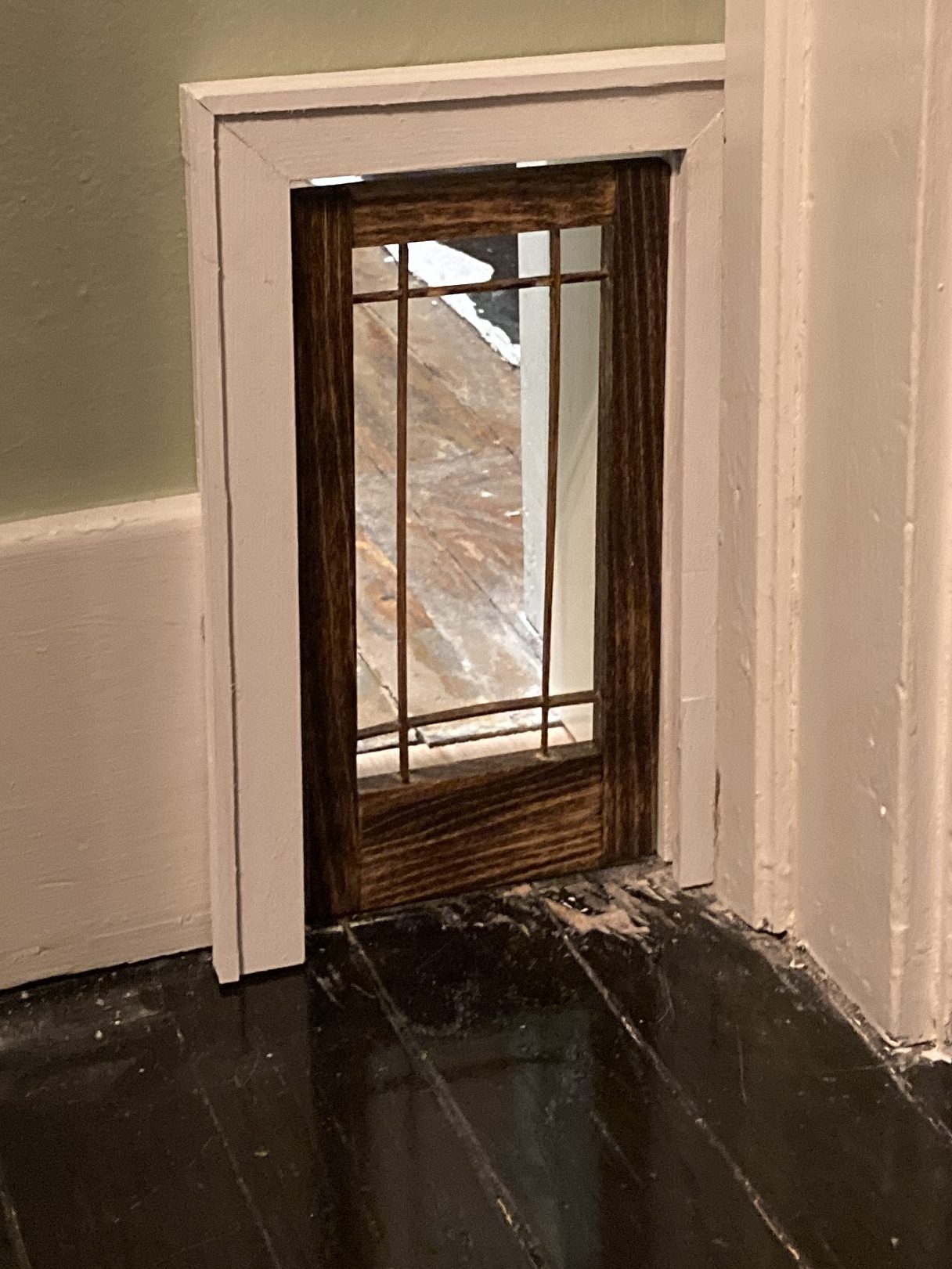
The Solution: Cat door installed in the wall. Of course this opens up a lot of unknowns so I figured I’d just cut a hole and see what happens. I put a tape measure next to the cat to figure out a comfortable hole size. I marked the wall with a sharpie on the basement side and started cutting with the oscillating saw.
Before you start thinking, can’t you just buy a cat door? Of course you can. I’ve installed them in other houses and even elsewhere in this house. This opening; however, is in the entry foyer of the house and I needed it to match the aesthetic of the rest of the house. Now, can you buy a 1920’s style craftsman style style cat door? I also, discovered that I have ver specific dimensions requirements that most commercial cat doors did not meet.
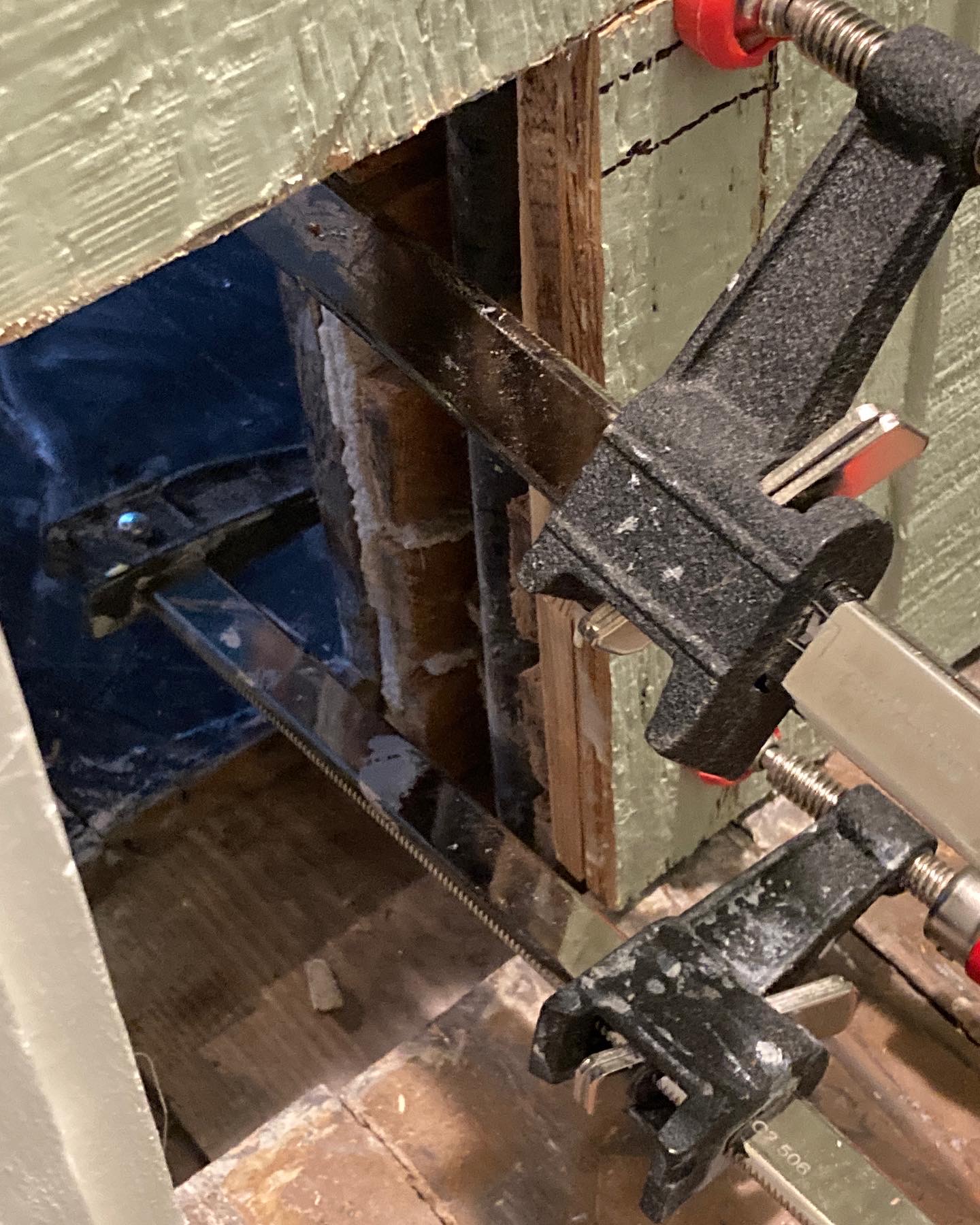
I originally cut the opening about an inch and a half to the right, but ran into an electrical conduit. I shifted the opening to the left , which made the door a bit too close to the corner for my liking. That will become a trim problem later. I glued and clamped the first cut piece back in place.
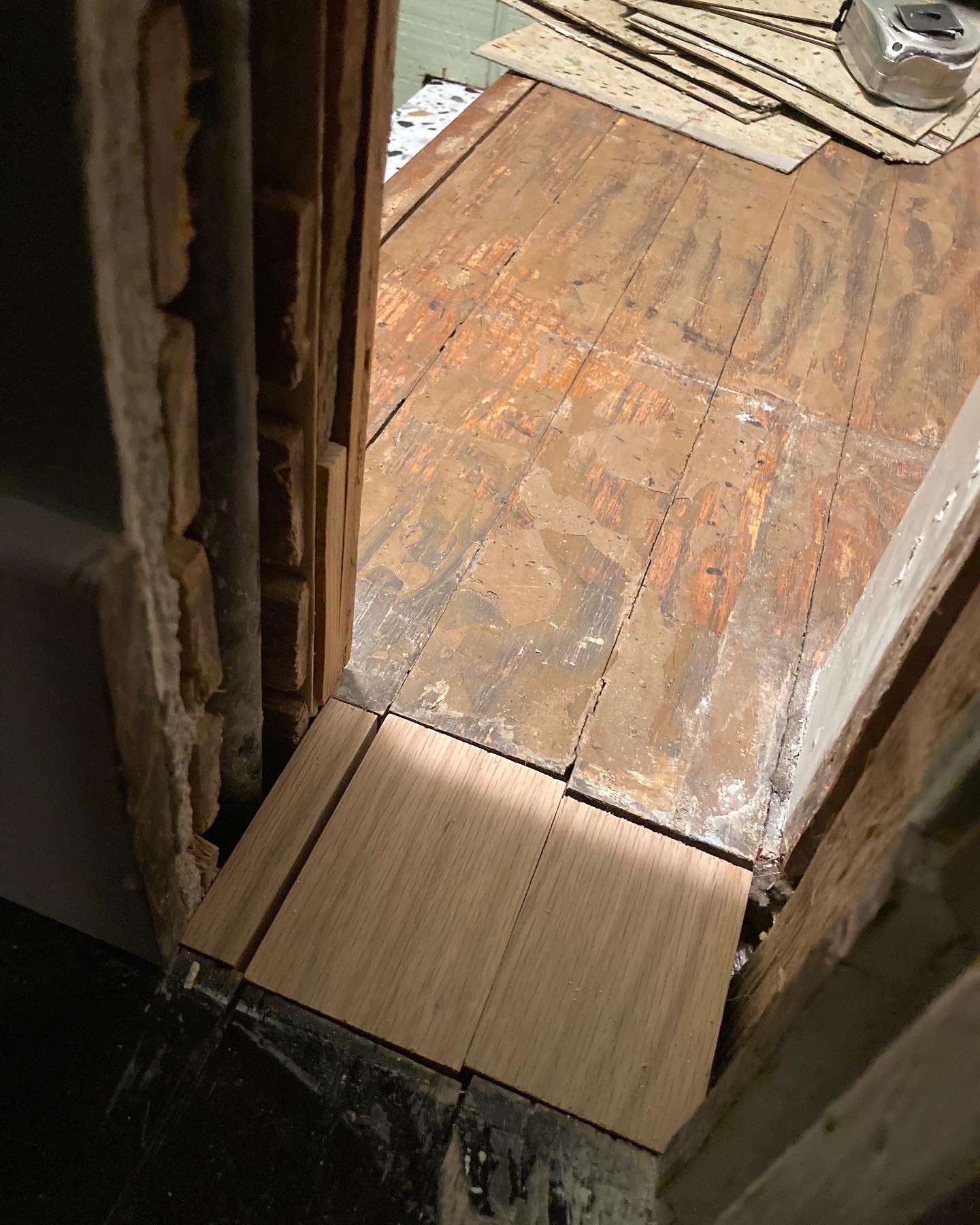
The 3/4 oak is just butt jointed and glued to a half inch filler block. I added stain at the end. You can see the conduit and stud I tried to avoid in this photo.
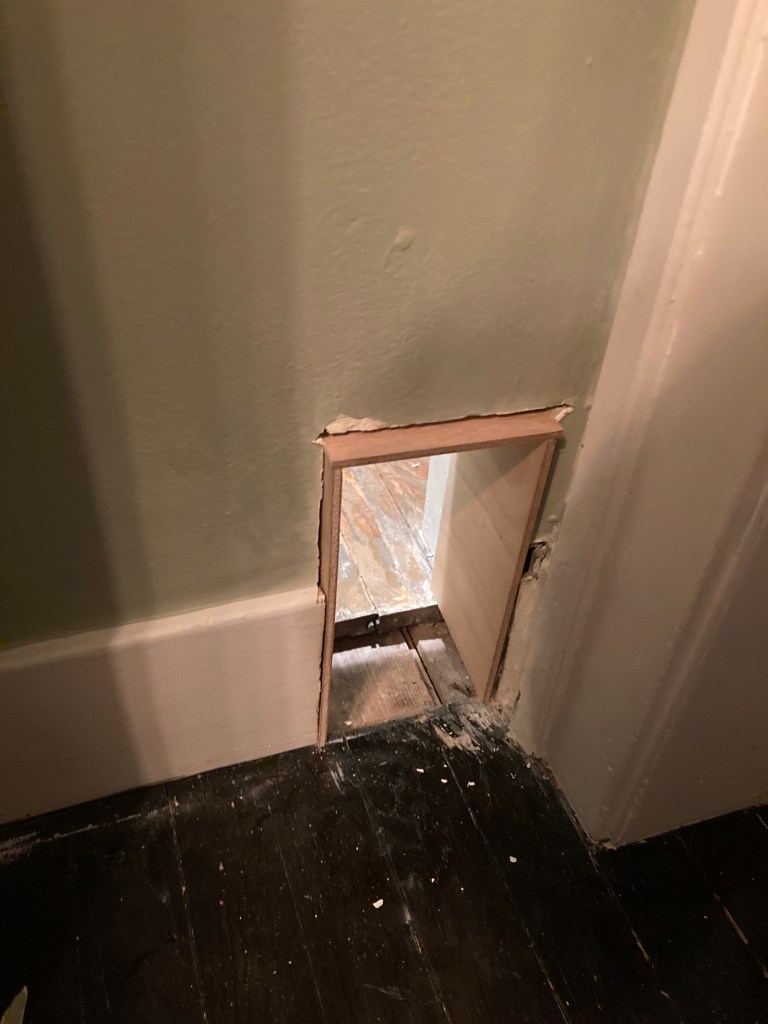
I made the jambs out of 3/16” plywood and used CA glue to attach to the rough opening after I painted it.
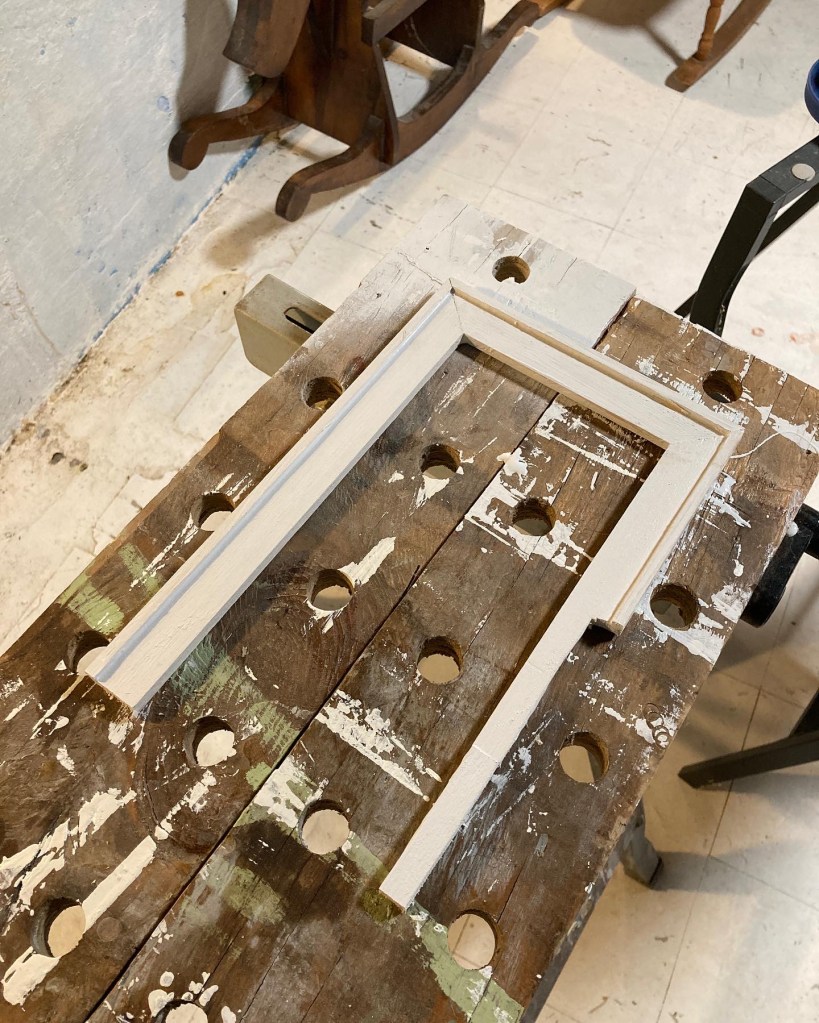
I used CA glue and activator to assemble the trim before painting.
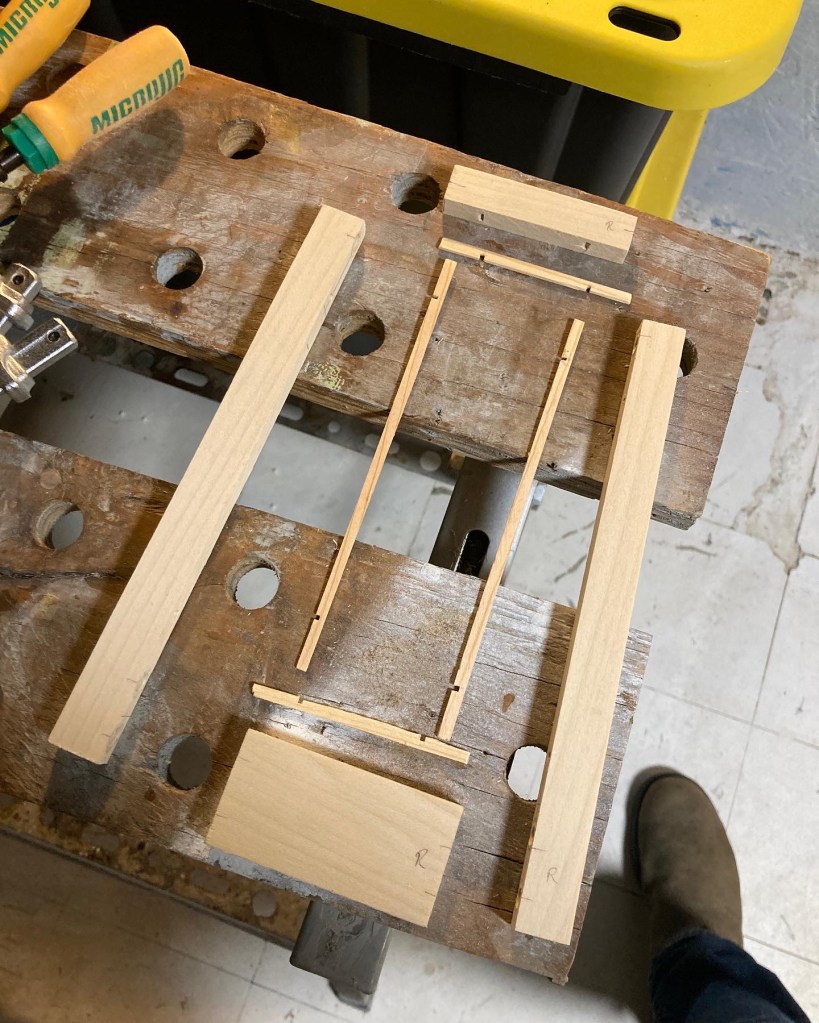
The original plan was to paint the door so I used some scrap 1/2” poplar for the parts. I used a ban saw to cut the half laps in the mini dividers and flat head screwdriver to make the recess to receive them.
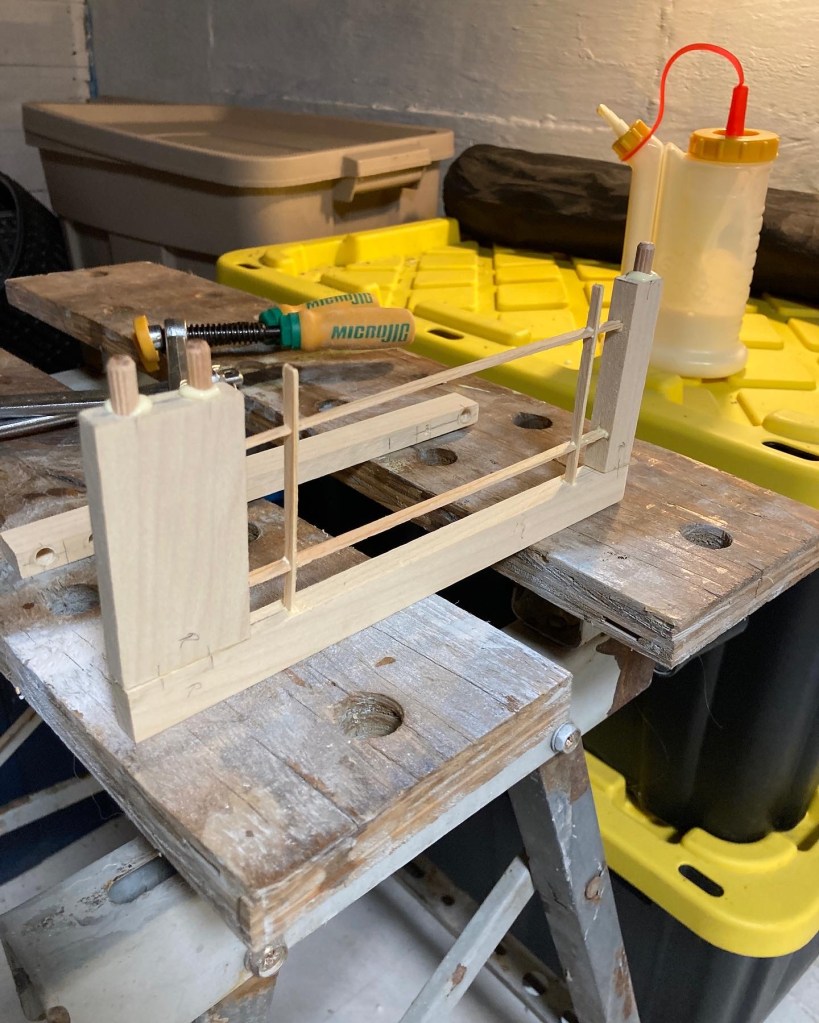
I used 1/4” dowels to assemble. For sure overkill for this size door, but the process was pretty easy.
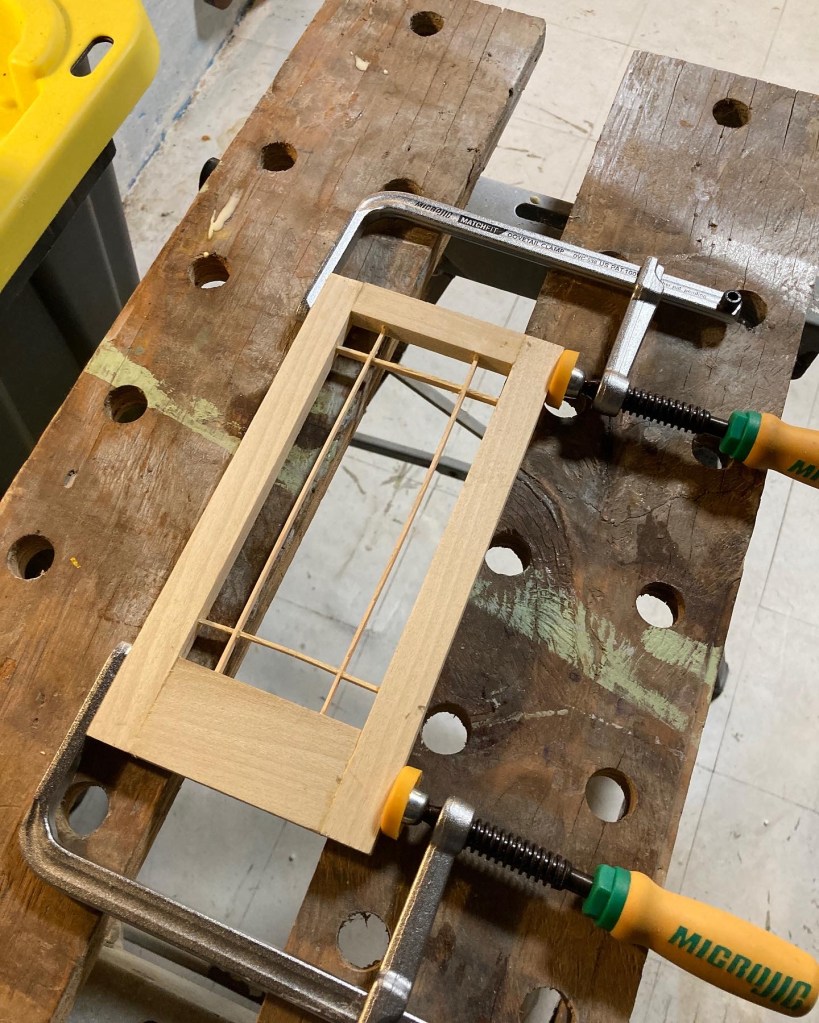
I ended up staining the door, but I’m not exactly happy with the finish so I may remake it out of oak to match the rest of the doors in the house. Hinges and hardware to follow. For now it will stay a cased opening for a bit.


 Witch Wood Works
Leave a reply to Wood Witch Cancel reply